
Introduction: When determining “how to assess the level of management in the Tai Po data center in Hong Kong through on-site inspections,” on-site inspections can directly reflect the details of management. This article provides a structured checklist for data centers in the Tai Po area to help decision-makers assess management maturity and risk control capabilities through on-site observations and inquiries.
Preparations and data verification before field investigation
Before the on-site inspection, prepare a site checklist and background information, including the size of the server room, service levels, and contractual requirements. Verify the floor plans and the locations of power and network access points, and preset key issues (such as redundancy levels and inspection frequencies). Organized preparation can reduce oversights on-site and improve the efficiency and relevance of evaluations.
External Environment and Location Assessment
Evaluating the environment surrounding the server room has a direct impact on its management: Traffic accessibility, flood or geological risks, and nearby sources of disturbance (noise, chemicals) all affect the difficulty of operation and maintenance. Observe the security at the entrance and the condition of public facilities to ensure that entry/exit controls and emergency exits are clear and safe.
Building Structure and Physical Safety Inspection
Physical security reflects the level of management: Check the access control system, surveillance coverage, visitor registration process, and server room isolation. Check whether the firewall, smoke detection, and waterproofing measures are in place. Good construction and strict access control are basic indicators of standardization in computer rooms.
Power Supply System and Redundant Design
Power supply stability is key: Check the mains inlet, UPS, generator configuration, and automatic switching status, and inquire about the frequency of routine tests and fault response procedures. Fully document redundant paths and redundancy proofs to determine whether they meet business continuity requirements and whether management is proficient in responding to power outages.
Refrigeration Systems and Environmental Monitoring
The control and monitoring of temperature and humidity in the server room reflect the level of daily operations and maintenance. On-site inspection of the operating noise of air conditioning units, redundancy of cooling circuits, distribution of hot spots in cabinets, and the networking method for environmental monitoring alarms in the machine room. Good management includes complete alarm records and regular cleaning and maintenance plans.
Network Connectivity and Rack Management
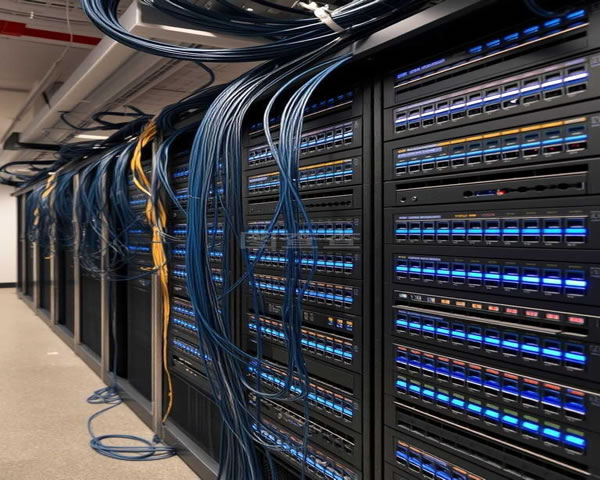
Network facilities should be easy to identify and maintain: Check the fiber optic connections, the location and labeling of switches, the neatness of cabling in the cabinets, and the capacity reservation. Ask about link redundancy, DDoS protection, and bandwidth monitoring mechanisms. A standardized cabinet and labeling system is an intuitive indication of high-level management.
Operations processes and personnel qualifications
Management level is directly related to team capability: Verify the duty shift system, emergency response plans, records of regular drills, and personnel training records. By communicating with on-site operation and maintenance personnel, understand whether inspection frequencies, change management, and fault handling procedures are documented and put into practice.
Suggestions for On-site Recording and Data Collection
Evidence collected on-site should be organized systematically: Take screenshots of key equipment, record serial numbers, environmental data, and alarm logs, prepare an inspection report, and confirm it with the data center management. Preserving evidence helps with subsequent comparison and contract performance monitoring, reflecting the objectivity of professional judgment.
Summary and Recommendations
Summary: Through structured on-site inspections, a comprehensive assessment can be made of the level of management at the Tai Po data center in Hong Kong. Pay special attention to physical security, power and cooling redundancy, network connectivity, and operations and maintenance processes. It is recommended to compile an inspection report by combining written materials and on-site evidence, which can serve as an important basis for investment promotion, leasing, or supplier evaluation.
- Latest articles
- A Practical Guide To Listing And Deploying Taiwan Cloud Server On Amazon
- Research On The Access Speed And Conversion Rate Of E-commerce Websites After Using Japanese Line CN2 Transfer
- Technical White Paper South Korea’s Large Bandwidth Server Rental Architecture And Bandwidth Control Strategy
- A Must-read For Beginners: Practical Methods For Optimizing Performance After Downloading And Installing Vietnam Zombie Servers
- Shanghai Japan Cloud Server Network Latency Test And Optimization Implementation Plan
- Korean Group Website Advertising Strategy, Local Platform Selection And Conversion Rate Improvement
- Network Interconnection And Routing Practice Of Hong Kong Cloud Server Cn2 In Multi-cloud Architecture
- From Logs To Traceability, Tracking And Analysis Methods After Tencent Cloud Hong Kong Server Was Attacked
- Stable And Cheap Malaysian Server For Live Video Broadcast. Key Points Of Delay And Jitter Control
- Sharing The Steps, Risks And Implementation Experience Of Enterprises Migrating To Cambodian Servers Alibaba Cloud
- Popular tags
-
Configuration Suggestions And Purchasing Guide For Computer Rooms In Hong Kong
this article provides you with configuration suggestions and purchase guides for computer hosts in hong kong computer rooms to help you choose appropriate hardware and optimize performance. -

How Can The Agency Industry Understand The Requirements And Barriers For Joining The Business Of Hosting Servers In Hong Kong?
A guide for those wishing to enter the agency industry, explaining the requirements and barriers for joining the Hong Kong server hosting franchise business. This guide covers aspects such as market overview, compliance obligations, technical and operational capabilities, business terms, risk assessment, and implementation recommendations, to assist in making informed decisions. -
Beginner's Guide To Quickly Deploying WordPress And Setting Up SSL On A Hong Kong Server
A beginner-friendly tutorial for quickly deploying WordPress and configuring SSL on Hong Kong servers. It covers preparation work, environment setup, WordPress installation, file permissions and security, Let’s Encrypt SSL configuration, as well as common issues and optimization tips to help you launch a stable and secure website as soon as possible.